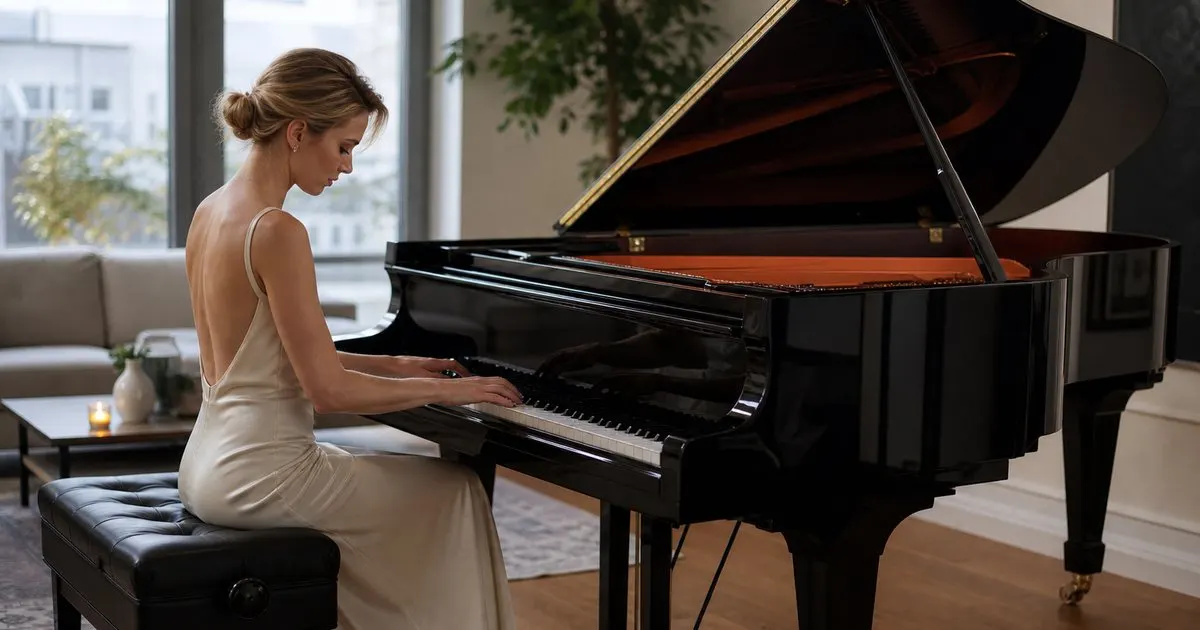
Soundboard quality
A solid spruce soundboard, properly crowned and seasoned, gives a piano its singing tone and sustain. The board is the instrument's voice, and its material and construction shape everything you hear at the keyboard.
Thoughtful guidance for buyers weighing high-end grand and upright pianos, from soundboard and action to the craftsmanship that endures.
An independent guide. We may earn a commission from some links, at no extra cost to you.
Fall lesson season and planning a holiday delivery. Buyers who want a piano in place for the holidays should begin in September. Delivery, dealer preparation and a first in-home tuning all take time, and the room needs to be ready first.
How much space a grand really needsThe considered choice most serious players should weigh first, balancing voice, touch, and value. Refined scale design, Responsive, even action, Full singing tone.
A fine piano is chosen once and lived with for decades, yet its true character emerges slowly. A soundboard that loses its bloom, an action that grows uneven, a case that survives only in a stable room. These qualities are difficult to judge in a single showroom visit.
Buyers are asked to evaluate craftsmanship that even trained ears take time to read. This guide clarifies what genuinely shapes tone, touch, and longevity, so the instrument you bring home rewards practice today and remains worthy of it for a lifetime.
The details that separate a considered purchase from an expensive mistake at this level.
A solid spruce soundboard, properly crowned and seasoned, gives a piano its singing tone and sustain. The board is the instrument's voice, and its material and construction shape everything you hear at the keyboard.
A precisely regulated action responds to the lightest nuance and repeats reliably at speed. The touch is where technique meets the instrument, and a fine action rewards a developing player rather than fighting them.
Thoughtful scaling and quality strings produce even tone across the range, without weak passages or a harsh treble. Good design lets the bass sing and the top notes shimmer in balance.
Solid construction and a hand-applied finish age gracefully and hold tune-supporting stability. The cabinetry is both furniture and structure, and its quality signals the care taken throughout the instrument.
Length in a grand and height in an upright generally lend fuller tone and longer bass strings. The right size balances acoustic ambition against the room that must house and support it.
A piano worth owning can be voiced, regulated, and rebuilt by qualified technicians for generations. Availability of parts and service is part of what makes a fine instrument a lifelong companion.
A calm, three step way to arrive at the right choice with confidence.
Spend real time at the keyboard, listening for even tone and a touch that suits you. Tone and feel are personal, and no specification substitutes for your own hands and ears.
Plan for stable temperature and humidity and a placement away from vents and direct sun. A fine piano rewards a considered room and suffers in one that swings between extremes.
Budget for regular tuning and periodic voicing and regulation from a trusted technician. A great instrument stays great only with the attention its craftsmanship deserves.
A clear sense of what to expect at every level, from entry to bespoke. Independent guidance, never a sales pitch.
Figures are typical US market ranges to guide your planning, not quotes.

This guide is maintained by an independent editorial desk that studies fine pianos alongside tuners and concert technicians. We accept no payment to favor a maker, and we judge instruments by tone, touch, and how well they endure a lifetime of playing.
A grand generally offers a more responsive action and fuller tone, while a fine upright saves space and can sound remarkable. The right choice depends on your room, your playing, and your budget rather than prestige alone.
Longer strings and larger soundboards tend to produce fuller bass and richer tone, but scale design and build quality matter greatly. A well-made smaller piano can outshine a poorly made larger one.
Most benefit from tuning at least twice a year, with occasional voicing and regulation. A stable room reduces how far the instrument drifts and helps it hold its best voice between visits.
A quality player system adds versatility without harming the acoustic instrument when properly installed. Whether it suits you depends on how you intend to use and enjoy the piano at home.
Yes. With a stable environment and periodic service, a well-built piano can be maintained and even rebuilt for many decades. Its longevity rests on craftsmanship and care rather than price alone.
No. We are an independent guide comparing options to help you decide, and we may earn a referral fee. Nothing here is financial advice; treat it as careful editorial guidance.
Our full buying guide, the price guide, and new research as we publish it. One email, no spam, unsubscribe any time.
A pianist guide to buying grand and upright pianos. Independent guidance, written to help you choose well.
Read the complete guide