How do you find and vet a piano technician before a new grand arrives?
The technician who services your instrument shapes how it sounds and feels far longer than the dealer who sold it. Here is how to identify, interview and secure a good one before delivery day.
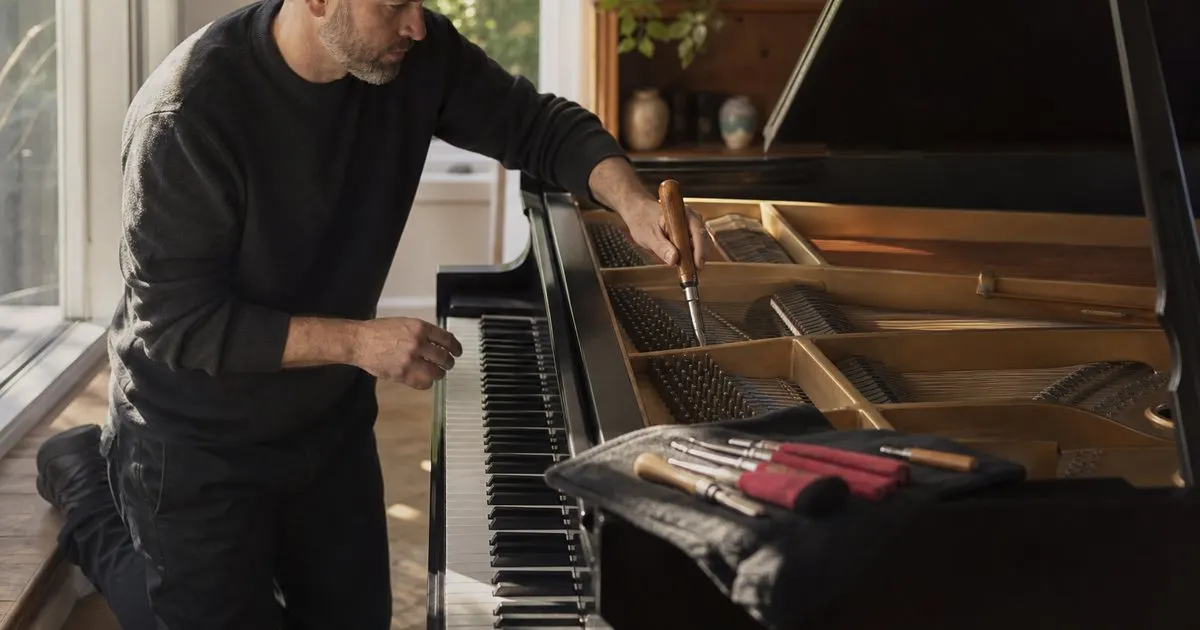
The technician, not the dealer, is the relationship that lasts
A fine piano arrives at your home only partly finished. Regulation settles, felt compresses, the soundboard responds to a new climate, and the tone you heard in a showroom becomes something slightly different in your own room. All of that is the technician's territory, not the dealer's. You will meet the salesperson once or twice. You will see the technician at least twice a year for tuning, and more often in the first year, for as long as you own the instrument. Over a decade that adds up to a working relationship measured in dozens of visits. Related: How do you choose between a grand and upright piano for the home?
This is why the search should begin before the truck is scheduled, not after the first tuning starts to sound overdue. Capable technicians in busy metropolitan areas are frequently booked several weeks ahead, and the best of them build their calendars around institutional clients and long-standing private customers. A new grand needs attention while it is still settling, which is exactly when you least want to be calling strangers from a search results page. Line up the person first, then let the instrument arrive into a plan rather than into improvisation.
Keep reading: How do you choose between a grand and upright piano for the home?, What makes a concert grand piano worth its considerable investment for discerning musicians?, Which room conditions best preserve a fine high-end piano over many decades?. See how Pianoluxe helps you a pianist guide to buying grand and upright pianos.
What credentials and training actually tell you
In the United States, the most widely recognized qualification is the Registered Piano Technician credential, which is earned by passing written, tuning and technical examinations rather than by paying dues. It does not certify artistry, and there are superb technicians who never sat the exams, but it does establish a floor: the holder can tune to a defensible standard, diagnose action problems and carry out repairs without improvising. Treat it as evidence rather than proof, and pair it with the other markers that matter, namely formal apprenticeship under a rebuilder and factory training courses run by manufacturers for their service networks. Related: Are hand-built pianos meaningfully better than factory produced instruments for serious players?
Then ask about specialization, because the field is wider than most buyers expect. Some technicians concentrate on general tuning and light regulation. Others do concert preparation, fine voicing and full action work on high-end grands, and a smaller group focuses on rebuilding. You want someone whose weekly work resembles your instrument. A useful question is what share of their calls involve grands in your class, and whether they serve universities, recording studios, concert venues or churches. Institutional clients demand repeatable results on a schedule, and technicians who keep those accounts tend to be consistent. Related: What makes a concert grand piano worth its considerable investment for discerning musicians?
The questions to ask, and what a good answer sounds like
Ask how they tune, whether by ear, with an electronic tuning device, or with a hybrid method, and listen for a calm explanation rather than a defensive one. Ask how they handle a piano that has drifted well below pitch, since a pitch raise is normally treated as separate work followed by a fine tuning. Ask how they approach voicing, particularly whether they favor needling the hammer felt over applying hardeners, and under what circumstances they would do either. The strongest sign is a technician who asks questions back: what you play, how many hours a week, and what you dislike about the sound now. Related: Which room conditions best preserve a fine high-end piano over many decades?
Money and logistics deserve the same directness. Establish the tuning fee, whether regulation and voicing are billed hourly or quoted by the job, whether your address falls inside their normal service area, and whether there is a trip minimum. Ask about typical lead time for a routine appointment and what happens when you need attention before a recital, a lesson exam or a recording session. Ask whether they carry liability insurance and how they would handle a part damaged in service. A short confirming email after the conversation costs nothing and prevents the disagreements that sour otherwise good working relationships.
Bringing the technician in before delivery, and keeping them after
Invite your candidate to see the room before the piano is placed in it. A technician who walks the space will notice the heating vent aimed at the wall you had chosen, the west window that will bake the case every afternoon, the radiant floor that dries the air, and the corner where a humidity control system can be serviced without dismantling the room. If you are buying used or privately, a pre-purchase evaluation by an independent technician is one of the few expenses in this process that reliably pays for itself, precisely because that person has no stake in whether the sale closes.
Once the instrument is home, book the settle-in service rather than waiting to notice a problem, and keep a simple log: dates, work performed, indoor humidity readings, and any note about what you asked for tonally. A technician who sees the same instrument year after year learns its pinblock, its stability through the seasons and the touch you prefer, and that accumulated knowledge is not transferable in a phone call. Be an easy client in return. Clear the area, keep pets and small children out of the room, allow enough quiet time for the work, and give real notice when you need concert preparation.
- Book a technician before delivery, since capable ones in busy markets often schedule several weeks out.
- Treat the Registered Piano Technician credential as a reliable floor, then ask about specialization in high-end grands.
- Settle fees, service area, lead times and insurance in writing before the first appointment.
- Keep a service log and stay with one technician so knowledge of your instrument accumulates.

Julien Jimenez
Julien Jimenez is an independent software builder based in Paris. He designs, ships, and operates focused SaaS products for small businesses and independent professionals. Read the full author page.
An Instrument for a Lifetime
A pianist guide to buying grand and upright pianos. Pianoluxe is built to help you put this into practice.
Find your pianoMore from the Pianoluxe blog

How do you choose between a grand and upright piano for the home?

What makes a concert grand piano worth its considerable investment for discerning musicians?

Which room conditions best preserve a fine high-end piano over many decades?
Get the complete high-end grand and upright pianos guide
Our full buying guide, the price guide, and new research as we publish it. One email, no spam, unsubscribe any time.