Does a standard homeowners policy adequately cover a high-end grand piano against loss?
Most policies treat a fine piano as ordinary contents, which can leave a large gap after a fire, flood, or move. Here is how appraisal and scheduling close it.
How a piano is usually treated under contents coverage
A typical homeowners policy covers personal property up to a percentage of the dwelling limit, and within that, it covers a piano as it would a sofa. That sounds adequate until you look at the details: many policies pay actual cash value on contents unless replacement cost coverage was added, sublimits may apply to certain categories, and the causes of loss that are covered can exclude the ones most likely to affect a piano, notably flood and, in some policies, damage during a move.
The gap appears at claim time. Without documentation, an adjuster will value a piano by whatever evidence exists, and an owner who has no appraisal, no receipt, and no photographs is negotiating from weakness. Even with a receipt, an instrument bought years ago may now cost far more to replace, and a policy paying depreciated value could leave a considerable shortfall between the check and the cost of an equivalent new or rebuilt piano. Related: What makes a concert grand piano worth its considerable investment for discerning musicians?
Keep reading: How do you choose between a grand and upright piano for the home?, What makes a concert grand piano worth its considerable investment for discerning musicians?, Which room conditions best preserve a fine high-end piano over many decades?. See how Pianoluxe helps you a pianist guide to buying grand and upright pianos.
Scheduling the piano as a separate item
The standard solution is to schedule the piano on the policy as a specifically listed item with its own agreed or appraised value. Scheduled personal property coverage typically broadens the causes of loss, removes or reduces the deductible, and often pays the agreed amount without the depreciation argument. It usually costs a modest additional premium relative to the value insured, and for an instrument in the range this guide covers it is the sensible default.
To schedule the piano, the insurer will generally ask for a recent appraisal or a purchase receipt, the make, model, and serial number, and photographs. Ask specifically whether the schedule covers the piano while it is being moved by professional movers, while it is out of the house for restoration, and against accidental damage in the home, since these are the situations where a fine piano is most exposed and where a plain contents policy is weakest. Related: How do you choose between a grand and upright piano for the home?
Getting an appraisal that insurers respect
A piano appraisal for insurance should be written by a qualified technician or dealer with experience in the instrument's category, and it should state the replacement value, meaning the cost of an equivalent instrument today, rather than a resale figure. The appraiser should record the serial number from the plate, describe the condition of the action, soundboard, and case, note any restoration, and include photographs. A one-line letter with a number on it is not enough. Related: Why does soundboard material shape the tonal character of a luxury grand piano?
Appraisals age. The cost of replacing a fine piano changes with the market, and an appraisal from a decade ago will not persuade an adjuster of today's value. Plan to renew the appraisal every few years and after any major work, such as a rebuild or a refinish, that changes the value. Keep the document with the purchase receipt, technician invoices, and photographs in a place that would survive the loss of the house, which usually means a cloud copy as well as a paper one.
Documenting and protecting between claims
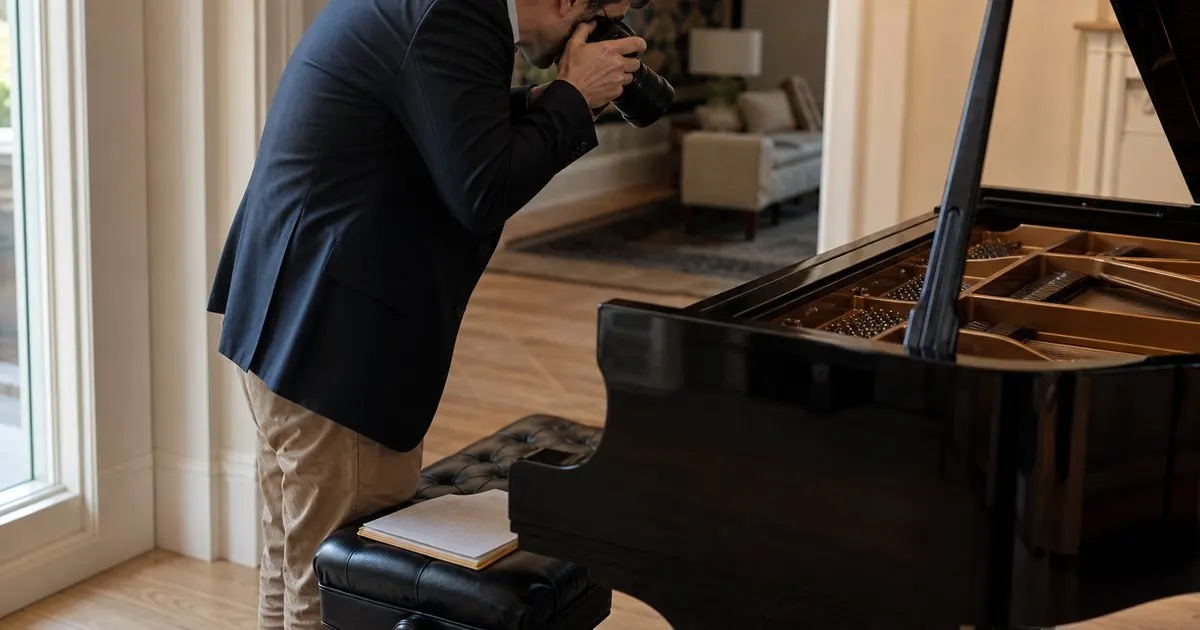
Photograph the piano from every side, open and closed, and photograph the serial number, the plate, and any distinctive features of the case. Keep a folder of every tuning and service invoice, because they prove the instrument was maintained and help establish condition. If you commission restoration, keep the shop's itemized record. All of this is also exactly what a buyer will want to see if you ever sell, so the effort pays twice.
Finally, reduce the risks the policy is there for. Keep the piano away from water sources and exterior walls prone to leaks, use a humidity control system, and hire only insured specialist movers with declared-value coverage. Insurance restores money, not the particular instrument you chose, and a fine piano that has been in your family for years cannot be replaced in the way a sofa can. Prevention is the better policy. Related: Which room conditions best preserve a fine high-end piano over many decades?
- Standard contents coverage may pay depreciated value and exclude the losses most likely to affect a piano.
- Scheduling the piano as a listed item with an appraised value closes most of the gap for a modest premium.
- A proper appraisal states replacement value, records the serial number and condition, and includes photographs.
- Renew the appraisal every few years, keep all service records, and store copies off site.

Julien Jimenez
Julien Jimenez is an independent software builder based in Paris. He designs, ships, and operates focused SaaS products for small businesses and independent professionals. Read the full author page.
An Instrument for a Lifetime
A pianist guide to buying grand and upright pianos. Pianoluxe is built to help you put this into practice.
Find your pianoMore from the Pianoluxe blog
How do you choose between a grand and upright piano for the home?

What makes a concert grand piano worth its considerable investment for discerning musicians?

Which room conditions best preserve a fine high-end piano over many decades?
Get the complete high-end grand and upright pianos guide
Our full buying guide, the price guide, and new research as we publish it. One email, no spam, unsubscribe any time.