What is the best way to move a grand piano into a home without damage?
A grand piano is moved on its side, on a skid board, by people who do nothing else. Here is what a professional move involves and how to prepare your house for it.
Why a grand is a specialist job
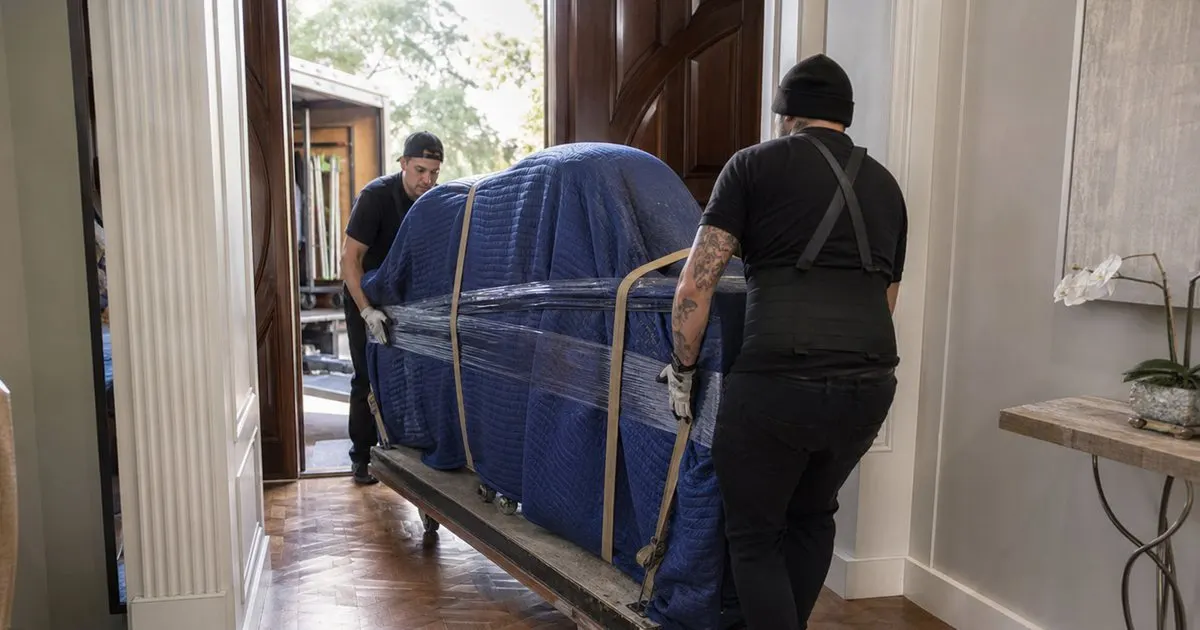
A grand piano is not carried into a house upright. The legs and lyre come off, the instrument is tipped onto its straight side onto a padded skid board, strapped, and rolled on a dolly to the room, where it is tipped back and the legs reattached. Done well, it is a quiet, almost undramatic process. Done by general movers, it is where cracked lyres, snapped leg plates, and gouged rims come from. Related: How do you choose between a grand and upright piano for the home?
The weight is only part of the difficulty. The rim of a grand is a laminated bent wood shell, the legs are attached by plates and bolts that must take load only in the intended direction, and the case finish marks at the slightest scrape. Dedicated piano movers own the skid boards, the padded straps, the stair-climbing equipment, and the experience to read a doorway in a glance. That is what you are paying for. Related: What makes a concert grand piano worth its considerable investment for discerning musicians?
Keep reading: How do you choose between a grand and upright piano for the home?, What makes a concert grand piano worth its considerable investment for discerning musicians?, Which room conditions best preserve a fine high-end piano over many decades?. See how Pianoluxe helps you a pianist guide to buying grand and upright pianos.
Preparing the house before the truck arrives
Walk the route yourself with a tape measure. Note the width of every doorway, the turning space in every hallway, the height of any step, and whether the front door swings out of the way. Tell the mover about each of these when you book, and photograph any tight turns. Interior doors can often be removed from their hinges in minutes, which is far better than discovering the problem with the piano halfway through.
Clear the room completely and decide the exact position before the crew arrives, because repositioning a grand once the legs are on is a job in itself. Protect wood floors with the mover's runners or sheets of hardboard, and think about the thresholds between rooms, where a dolly wheel can catch and jolt the instrument. If the piano must go up stairs, confirm whether the crew will use a stair climber or hand-carry, and whether extra crew are needed. Related: Why does soundboard material shape the tonal character of a luxury grand piano?
What to expect on moving day
A good crew arrives with a skid board sized to the piano, a supply of thick moving blankets, ratchet straps, a four-wheel dolly, and a small set of tools for the legs and lyre. They will wrap the case fully before tipping it, keep the lid locked or strapped closed, and bag the pedals and hardware. Watch how they handle the legs; they should be wrapped individually and never used as handles.
When the piano is in place, ask the crew to level it, check that all three legs bear evenly on the floor, and leave the caster cups in position if you use them. Do not expect it to be in tune. The change in environment and the physical handling will unsettle the tuning, and the standard advice is to let the instrument acclimate for a few weeks before the first tuning in its new home.
Long-distance moves, cranes, and insurance
For a cross-country move, ask whether the piano rides in a climate-controlled truck and whether it will be transferred between vehicles along the way, since each transfer is a chance for damage. A crated piano moved by a specialist freight service is safer than one moved with household goods. For upper-floor apartments without a suitable stairwell, a crane through a window or balcony is routine for piano movers and far less alarming than it sounds, though it adds cost and needs scheduling.
Confirm in writing what the mover's insurance covers and to what value. Many movers offer basic valuation by weight, which is useless for a fine instrument, and a separate declared-value policy for the full replacement cost is worth arranging. Photograph the piano from every angle before it is wrapped, and inspect it carefully before the crew leaves. Any damage should be noted on the paperwork on the spot. Related: Which room conditions best preserve a fine high-end piano over many decades?
- A grand travels on its side on a padded skid board with the legs and lyre removed; only specialist movers should do this.
- Measure every doorway, hallway, and stair on the route and share the details when you book.
- Decide the final position before the crew arrives and expect the piano to need tuning after it settles.
- Arrange declared-value insurance for the full replacement cost and photograph the instrument before wrapping.

Julien Jimenez
Julien Jimenez is an independent software builder based in Paris. He designs, ships, and operates focused SaaS products for small businesses and independent professionals. Read the full author page.
An Instrument for a Lifetime
A pianist guide to buying grand and upright pianos. Pianoluxe is built to help you put this into practice.
Find your pianoMore from the Pianoluxe blog

How do you choose between a grand and upright piano for the home?

What makes a concert grand piano worth its considerable investment for discerning musicians?

Which room conditions best preserve a fine high-end piano over many decades?
Get the complete high-end grand and upright pianos guide
Our full buying guide, the price guide, and new research as we publish it. One email, no spam, unsubscribe any time.