Which piano finish holds up best in a busy family living room over time?
High-gloss polyester, hand-rubbed lacquer, satin ebony, natural wood veneers: each finish ages differently under children, sunlight, and daily life. Here is how to choose.
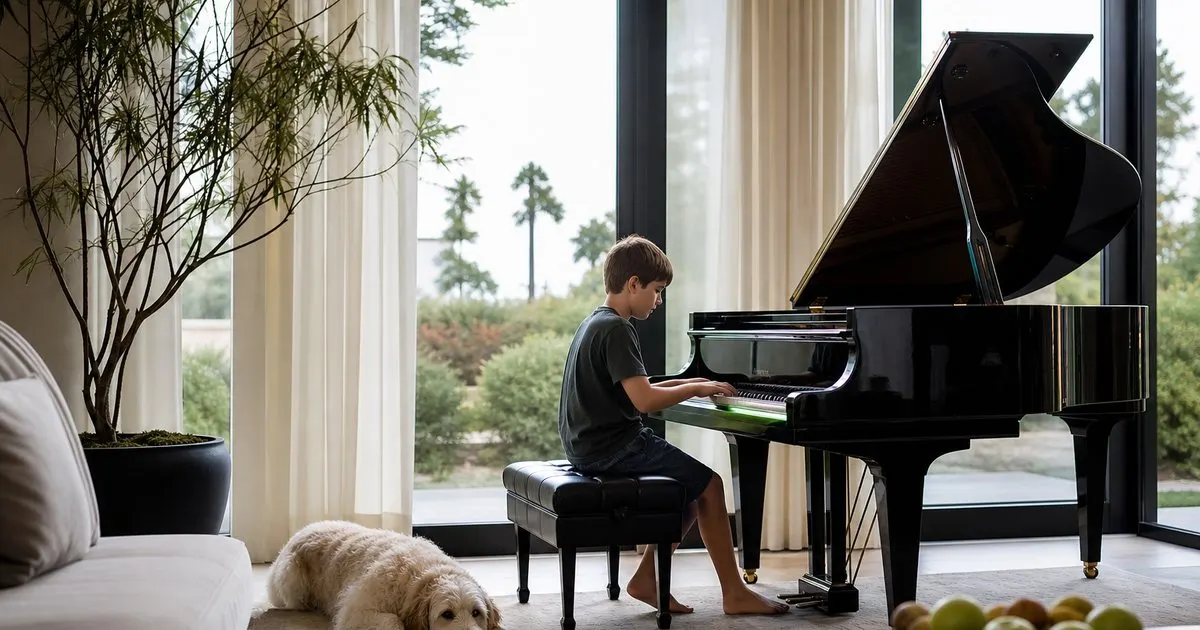
The two finishes you will actually be choosing between
Nearly every new high-end piano today wears one of two finish systems. Polyester is a thick, hard, sprayed coating that cures to a glass-like surface; it is what gives most modern grands their mirror shine, and it is also available in satin. Lacquer, applied in many thin coats and rubbed by hand, is the traditional finish still used by some makers and by most rebuilders on vintage cases. Both can be black or applied over a wood veneer. Related: What makes a concert grand piano worth its considerable investment for discerning musicians?
The practical difference is in how they take damage and how they are repaired. Polyester resists moisture rings, minor abrasion, and the everyday knocks of a family home better than lacquer, but when it does chip, usually at an edge, the repair requires filling and polishing that only a specialist can do invisibly. Lacquer scratches more easily but can be touched up, rubbed out, and blended by a competent refinisher, which makes it forgiving over a long life.
Keep reading: How do you choose between a grand and upright piano for the home?, What makes a concert grand piano worth its considerable investment for discerning musicians?, Which room conditions best preserve a fine high-end piano over many decades?. See how Pianoluxe helps you a pianist guide to buying grand and upright pianos.
Gloss or satin in a room full of life
High-gloss black is dramatic and photographs beautifully, and it also shows every fingerprint, every speck of dust, and every fine swirl left by a careless cloth. In a room where children practice and guests lean on the case, a gloss finish will demand attention. Owners who love it accept a routine of microfiber cloths and a proper polish, and they place the piano where raking sunlight does not spotlight the surface. Related: How do you choose between a grand and upright piano for the home?
Satin ebony hides fingerprints and dust, tolerates casual wiping, and reads as understated rather than showy. It is the choice of many teaching studios for exactly these reasons. Its drawback is that satin polyester can burnish to a shine where it is touched repeatedly, most visibly on the fallboard and the front edge of the key slip, and restoring an even sheen requires professional refinishing rather than a polish. A satin lacquer surface is easier to refresh.
Wood veneers, sunlight, and fading
Walnut, mahogany, cherry, and figured veneers are stunning and make the piano part of a room's furniture rather than an object apart from it. They are also sensitive to light. Direct sun through a window will lighten or darken a veneer unevenly over a few years, and a music rack left in one position will leave a shadow when it is moved. Placement away from direct sun, or window film that filters ultraviolet light, protects the color. Related: Which room conditions best preserve a fine high-end piano over many decades?
Veneer finishes also reveal moisture damage more readily than black, since a white ring from a glass shows against wood grain. Coasters and a strict no-drinks rule on the case are the practical answer. On the positive side, a wood-veneer case usually comes with a satin or open-pore finish that ages gracefully, and small marks blend into the grain in a way they never do on black.
Daily care that determines how any finish ages
Whatever the finish, the routine is the same. Dust with a clean, dry, soft cloth, moving in one direction rather than in circles. Remove fingerprints with a barely damp cloth followed immediately by a dry one. Use a polish only if it is made for the specific finish type, and use it rarely; most damage to gloss finishes comes from abrasive polishes and dirty cloths, not from neglect. Keep the lid closed when the piano is not in use if dust is a problem.
Think about the surroundings as much as the surface. A rug under the instrument reduces grit tracked toward it, a humidity control system protects the case joints as well as the soundboard, and a piano cover, though unglamorous, is the most effective protection in a house with pets and young children. A finish is only a thin layer over the wood beneath, and the wood cares about the same things the finish does. Related: Why does soundboard material shape the tonal character of a luxury grand piano?
- Polyester resists everyday knocks and moisture better; lacquer is easier to touch up and blend after damage.
- Satin ebony hides fingerprints and suits busy rooms, but it can burnish to a shine where it is handled most.
- Wood veneers need protection from direct sun and drinks; ultraviolet window film and coasters help.
- Dust in one direction with a dry cloth, polish rarely, and use a cover in homes with pets and small children.

Julien Jimenez
Julien Jimenez is an independent software builder based in Paris. He designs, ships, and operates focused SaaS products for small businesses and independent professionals. Read the full author page.
An Instrument for a Lifetime
A pianist guide to buying grand and upright pianos. Pianoluxe is built to help you put this into practice.
Find your pianoMore from the Pianoluxe blog
How do you choose between a grand and upright piano for the home?
What makes a concert grand piano worth its considerable investment for discerning musicians?
Which room conditions best preserve a fine high-end piano over many decades?
Get the complete high-end grand and upright pianos guide
Our full buying guide, the price guide, and new research as we publish it. One email, no spam, unsubscribe any time.