When should a serious student upgrade from a digital keyboard to a fine acoustic piano?
There is a point in a pianist's development where a digital instrument stops teaching and starts limiting. Learn to recognize the signs and how to time the purchase well.
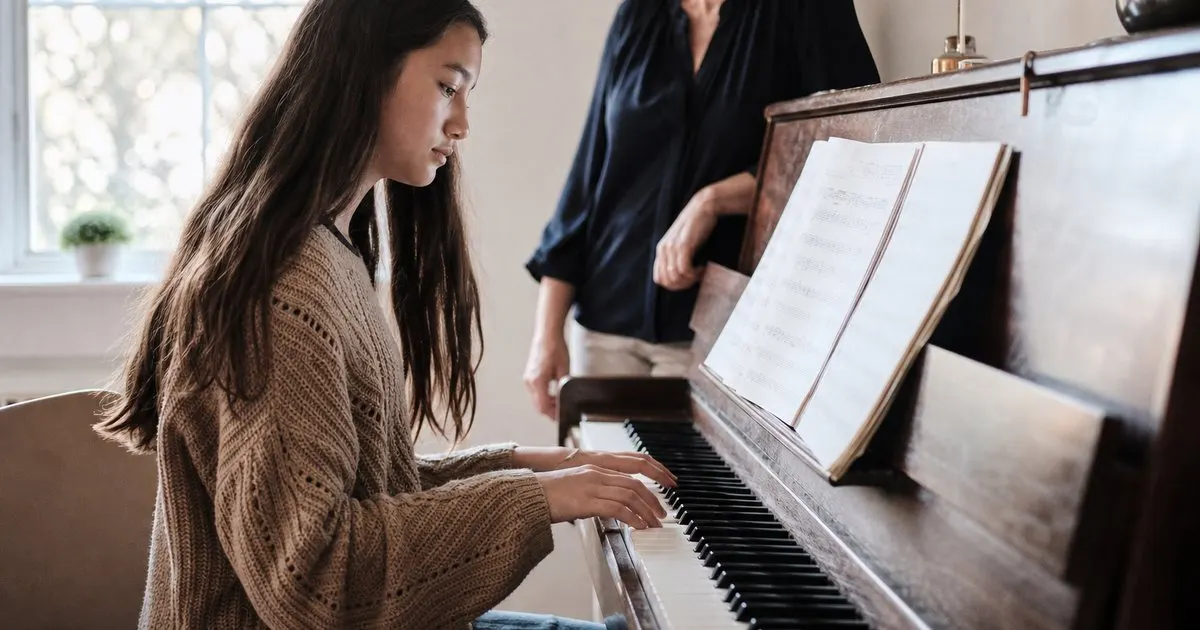
The signs that the instrument has become the limit
The clearest signal comes from the teacher. When lessons on the teacher's acoustic piano keep returning to the same corrections, particularly about tone, voicing between the hands, and pedaling, and the student cannot reproduce the fix on the home instrument, the home instrument is the obstacle. Most sampled digital pianos play back recorded tones across a set of velocity layers, and even where they interpolate between those layers, the gradation of color is narrower than what an acoustic action, a soundboard and a real room produce together. That continuous gradation is what a student needs to hear in order to learn to control it. Related: How do you choose between a grand and upright piano for the home?
A second sign is repertoire. Once a student is working on music that depends on sustained pedal effects, on half-pedaling, on una corda coloring, or on the way a chord blooms after the attack, a digital instrument stops giving useful feedback. If the student is preparing for examinations, competitions, or auditions that will take place on a grand, practicing on a keyboard that behaves differently is training for the wrong test.
Keep reading: How do you choose between a grand and upright piano for the home?, What makes a concert grand piano worth its considerable investment for discerning musicians?, Which room conditions best preserve a fine high-end piano over many decades?. See how Pianoluxe helps you a pianist guide to buying grand and upright pianos.
Why the jump is bigger than it looks
The physical difference is in the action. A fine acoustic action has real hammers with real mass and a precise escapement, and the resistance changes with speed and with where on the key you play. Students moving from a digital instrument, even one with a weighted action, typically find their fingers overplaying, their soft playing uncontrolled, and their fast passages uneven for a few weeks. That adjustment period is the point of the upgrade; it is where technique matures.
The acoustic instrument also introduces the room. Sound comes from a soundboard, not a speaker, and it interacts with walls, floor, and furniture. Students learn to listen differently, to hear the decay of a note, and to balance melody against accompaniment by ear rather than by a volume setting. None of this can be simulated well enough to substitute for the experience, which is why teachers push for the change when a student becomes serious. Related: Are hand-built pianos meaningfully better than factory produced instruments for serious players?
Choosing the right acoustic for this stage
For a student on the path toward advanced study, a tall upright of professional quality or a grand of medium size are the sensible candidates. A tall upright from a fine maker offers a responsive action and a rich bass in a footprint that suits most homes. A grand, even a modest one, offers the repetition and pedal behavior the student will meet on stage, and it is often the better choice if space and budget allow. Related: What makes a concert grand piano worth its considerable investment for discerning musicians?
Buy the best action you can afford rather than the largest case. A smaller grand with a superb action and thoughtful voicing teaches more than a larger instrument that has been neglected. Bring the teacher to the showroom if possible, because they know the student's weaknesses and can judge which instrument will expose and correct them. If the budget allows only a used instrument, an independent technician's inspection is essential.
Timing the purchase and keeping the digital
The ideal moment is before a demanding year of study, not during it, so the student has a summer or a lighter term to adapt. Delivery, settling, and the first tunings take a few months to complete, and the student should not be adjusting to a new action in the week before an audition. Buying in a slower season may also give more room to negotiate with a dealer.
Keep the digital instrument for what it does well: late-night practice with headphones, recording, and travel. Many households with a fine acoustic keep a keyboard in another room precisely for those purposes, and a student who tours or attends summer programs will be glad of it. The acoustic becomes the instrument for real practice, and the student learns to move between the two with a clear understanding of what each can and cannot teach. Related: Which room conditions best preserve a fine high-end piano over many decades?
- Upgrade when the teacher's corrections about tone and pedaling cannot be practiced at home.
- Repertoire that depends on pedal color and dynamic gradation is the practical threshold.
- Prioritize a superb action over a large case, and bring the teacher to the showroom.
- Time the purchase before a demanding year and keep the digital for headphone practice.

Julien Jimenez
Julien Jimenez is an independent software builder based in Paris. He designs, ships, and operates focused SaaS products for small businesses and independent professionals. Read the full author page.
An Instrument for a Lifetime
A pianist guide to buying grand and upright pianos. Pianoluxe is built to help you put this into practice.
Find your pianoMore from the Pianoluxe blog
How do you choose between a grand and upright piano for the home?
What makes a concert grand piano worth its considerable investment for discerning musicians?
Which room conditions best preserve a fine high-end piano over many decades?
Get the complete high-end grand and upright pianos guide
Our full buying guide, the price guide, and new research as we publish it. One email, no spam, unsubscribe any time.