What role does regular voicing and regulation play in maintaining a luxury piano?
How periodic voicing and regulation keep tone even and the action responsive over the years.
Voicing and regulation maintain a luxury piano beyond tuning: voicing shapes the hammers to keep tone even and true as they wear, while regulation adjusts the action so keys respond precisely and consistently. Together with regular tuning, a rhythm of this care from a trusted technician preserves both the joy of playing and the instrument's value.
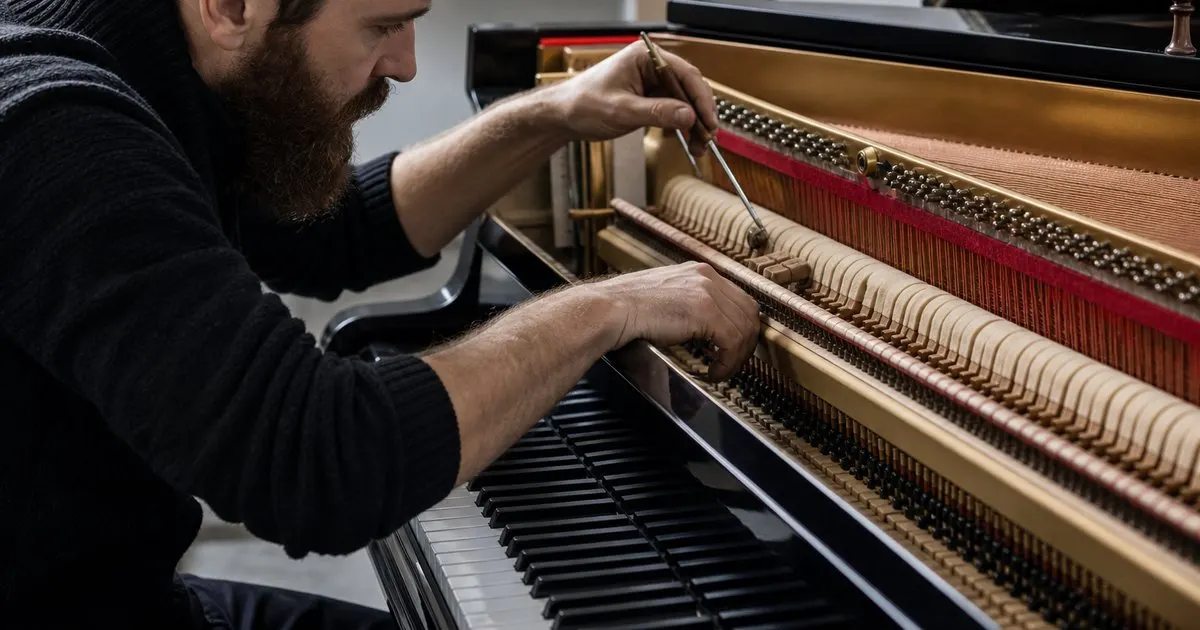
Beyond tuning
Tuning sets the pitch, but voicing and regulation shape tone and touch. Together they keep a fine piano performing as it was built to. Related: How do you choose between a grand and upright piano for the home?
Neglecting these lets an excellent instrument drift from its best. They are part of owning a luxury piano well. Related: Why does soundboard material shape the tonal character of a luxury grand piano?
Keep reading: How do you choose between a grand and upright piano for the home?, What makes a concert grand piano worth its considerable investment for discerning musicians?, Which room conditions best preserve a fine high-end piano over many decades?. See how Pianoluxe helps you a pianist guide to buying grand and upright pianos.
What voicing does
Voicing adjusts the hammers to shape tone, keeping it even and true to your preference across the range. Over time, hammers compress and tone changes.
Periodic voicing restores warmth or brightness as needed. It is how the piano's voice is kept in balance.
What regulation does
Regulation adjusts the action so keys respond consistently and precisely. With use, parts settle and the touch can grow uneven. Related: How do you evaluate the action and touch of a grand piano during a showroom trial?
Regular regulation keeps repetition and control crisp. For a serious player, this responsiveness is essential to expression.
A maintenance rhythm
Alongside regular tuning, plan periodic voicing and regulation with a trusted technician. The rhythm depends on use and the instrument.
This attention preserves both the joy of playing and the value of the instrument. A fine piano stays fine only with such care. Related: Which room conditions best preserve a fine high-end piano over many decades?
- Voicing and regulation go beyond simple tuning
- Voicing shapes and evens the tone as hammers wear
- Regulation keeps the action responsive and consistent
- A rhythm of care preserves both playing and value

Julien Jimenez
Julien Jimenez is an independent software builder based in Paris. He designs, ships, and operates focused SaaS products for small businesses and independent professionals. Read the full author page.
Frequently asked questions
How is voicing different from tuning?
Tuning sets the pitch of the strings, while voicing adjusts the hammers to shape tone and keep it even. A piano can be in tune yet still need voicing to sound its best.
How often does a piano need regulation?
It depends on use and the instrument, but the action settles over time and benefits from periodic regulation to stay responsive. A trusted technician can advise a schedule for your particular piano.
An Instrument for a Lifetime
A pianist guide to buying grand and upright pianos. Pianoluxe is built to help you put this into practice.
Find your pianoMore from the Pianoluxe blog
How do you choose between a grand and upright piano for the home?
What makes a concert grand piano worth its considerable investment for discerning musicians?
Which room conditions best preserve a fine high-end piano over many decades?
Get the complete high-end grand and upright pianos guide
Our full buying guide, the price guide, and new research as we publish it. One email, no spam, unsubscribe any time.